

The same photo can look great in one locket and cramped in another. That’s why finding the best locket shape for a photo starts with the picture itself. Where the faces sit, how much background you have, and the photo’s orientation all matter.
Mighty Dainty offers heart, round, and oval photo necklaces, giving you several shapes to consider. Knowing how each one frames a photo can help you choose the right fit for yours.
Round vs. Heart vs. Oval Locket Necklaces: Key Differences
The best locket shape for a photo depends on its composition and orientation. Here’s how the three options compare at a glance.
- A round photo locket favors a clear central subject. Close-up portraits, pet photos, and couples positioned near the center tend to use the circular space well.
- A heart-shaped photo locket gives nearby subjects useful width across the upper part of the frame. This can work especially well for two people with their faces close together.
- An oval picture locket makes good use of vertical composition. Its extra height can preserve details below the face, making it useful for portraits and other vertically framed photos.
When comparing different types of photo locket shapes, pay attention to what each crop keeps rather than the outline alone. The right frame should preserve the part of the photograph that makes it worth choosing.
Heart-Shaped Photo Locket: Best for Photos of Two People

A heart gives a photo plenty of width near the top, then gradually reduces the available space toward the point. This can make it the best locket shape for a photo of two people positioned close together.
Unlike a circle or oval, a heart creates an uneven crop. The curves shape the upper corners, while the point limits how much detail fits near the bottom. Photos with the main subject in the upper-middle area usually make better use of that space.
For a partner, child, parent, or another loved one, the heart can also reinforce who the necklace represents. Here, the shape contributes something to the photo rather than simply framing it.
Before choosing a heart locket necklace, look at what sits near the bottom of your photo. If that area contains little essential detail, the tapered shape can give the main subject plenty of room.
Round Photo Locket: Why Centered Photos Work So Well

Most photos start as rectangles or squares, while a round locket removes the corners entirely. That can make a circle the best locket shape for a photo built around one clear focal point.
Close-up portraits tend to adapt well because the face can fill much of the circular space. The same principle applies to pet photos and images of a meaningful object.
A round photo locket can also hold two people comfortably when they appear close together. Selfies often suit this format because both faces already occupy a compact area of the image.
The circular crop also changes the role of the background. Details near the corners disappear, giving the main subject a larger share of the finished image.
Round works especially well when the corners add little to the story. In that case, cropping them away gives the part you care about more room inside the locket.
Oval Picture Locket: Making the Most of Vertical Photos

An oval gives a portrait room above and below the face while keeping the frame relatively narrow. That can make it the best locket shape for a photo where details below the face matter.
Consider a graduation portrait where the gown helps identify the occasion. A wedding photo may include part of an outfit, while a family picture might show someone holding a child or pet. The oval can preserve those details while keeping the faces large enough to see.
Its proportions can also suit older family portraits that already have a tall composition. The frame can retain some of the original photograph around the subject, giving useful context to the image.
An oval picture locket earns its space when the lower part of the image adds something worth keeping. Look beyond the face and ask whether the clothing, pose, or person being held helps make the photo that photo.
How to Choose the Best Locket Shape for Your Photo
The best locket shape for a photo is easier to choose when you know how the image will read at pendant size. A few checks can help before you settle on the frame.
- Count the people in the photo. One person usually leaves plenty of room for a clear crop. With two or more, look at how closely everyone stands together. Faces that appear tiny in the original image will become even harder to see inside a small pendant.
- Start with the clearest original you have. A sharp image gives you greater freedom to enlarge and reposition the subject. If you have several versions of the same photo, compare them before choosing one.
- Check how much cropping room you have. Extra space around the subject gives you room to adjust the image inside the locket. This can be especially useful when you need to enlarge a face or move the subject slightly.
- Notice how busy the image feels. Detailed scenery, patterned clothing, and several small subjects can compete for attention at locket size. A clear focal point helps the important part of the photo remain easy to recognize.
- Decide which details actually matter. A hand on someone’s shoulder, a graduation gown, or a pet tucked under an arm may be part of why you chose the picture. Identify those details before cropping so they stay part of the finished image.
- Think at locket scale. Zoom your photo out until it appears roughly as small as the pendant image. This gives you a better sense of whether faces and other details remain recognizable.
- Compare cropped previews. Try the same photograph in each shape you’re considering. Pay attention to what each version keeps, rather than which outline you prefer on its own.
If two shapes both work, choose the one that preserves the detail you would miss first. That small question can make the final decision surprisingly easy.
Find Your Photo Locket at Mighty Dainty
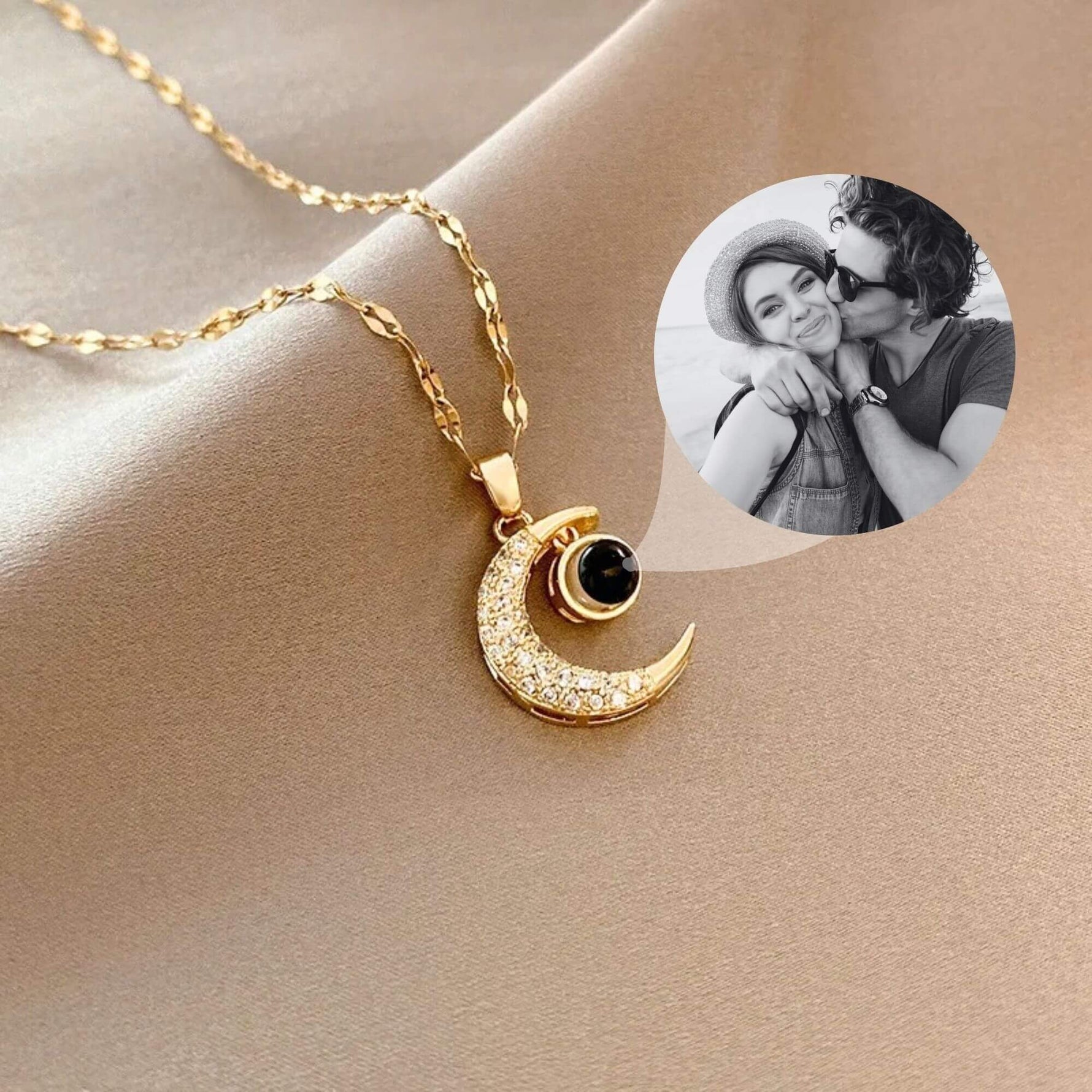
Once you know the best locket shape for a photo, Mighty Dainty gives you several ways to make it your own. The collection includes heart, round, and oval designs, alongside book, shell, floral, and celestial photo necklaces. Photo projection necklaces offer another way to carry an image, while select designs also include engraving options.
Mighty Dainty creates personalized jewelry in California, with the photograph forming part of the piece from the beginning. Choose the picture first, then find the design that gives the details you care about the right amount of space.
Frequently Asked Questions (FAQs)
-
What size photo do I need for a locket?
The right photo size depends on the dimensions and shape of the locket’s image area. For a personalized necklace, follow the photo-upload or sizing requirements provided for that specific design. Choose an image with enough space around the subject to allow for cropping.
-
How do you put a picture in a locket?
The process depends on the type of photo locket. Traditional lockets may use a printed photo cut to fit inside, while personalized photo necklaces can incorporate the image during customization. Check the instructions for your specific design before preparing the picture.
-
How do I resize a photo to fit a locket?
Start with a clear, high-resolution image and crop it to suit the locket’s shape and image area. Keep the main subject comfortably inside the crop, then preview it at a small size. For personalized necklaces, use the dimensions or upload tool provided for the specific piece.
-
What is the difference between a photo locket and a projection necklace?
A photo locket holds an image within the pendant, often inside a design that opens to reveal it. A projection necklace incorporates a small personalized image that you can view through the pendant or project using light. The main difference is how you see the photo.